


Are You Ready to Get Your Smile Back?
We make getting started easy with online scheduling, financing options, and a supportive, guided experience. New patients are always welcome.


Wondering if dental implants are the right solution for you? At Lakeside Family & Implant Dentistry, we make it easy to find out. Take our short, 2-minute quiz to see if you’re a candidate and learn how our expert team can help you achieve a confident, lasting smile with personalized implant care.
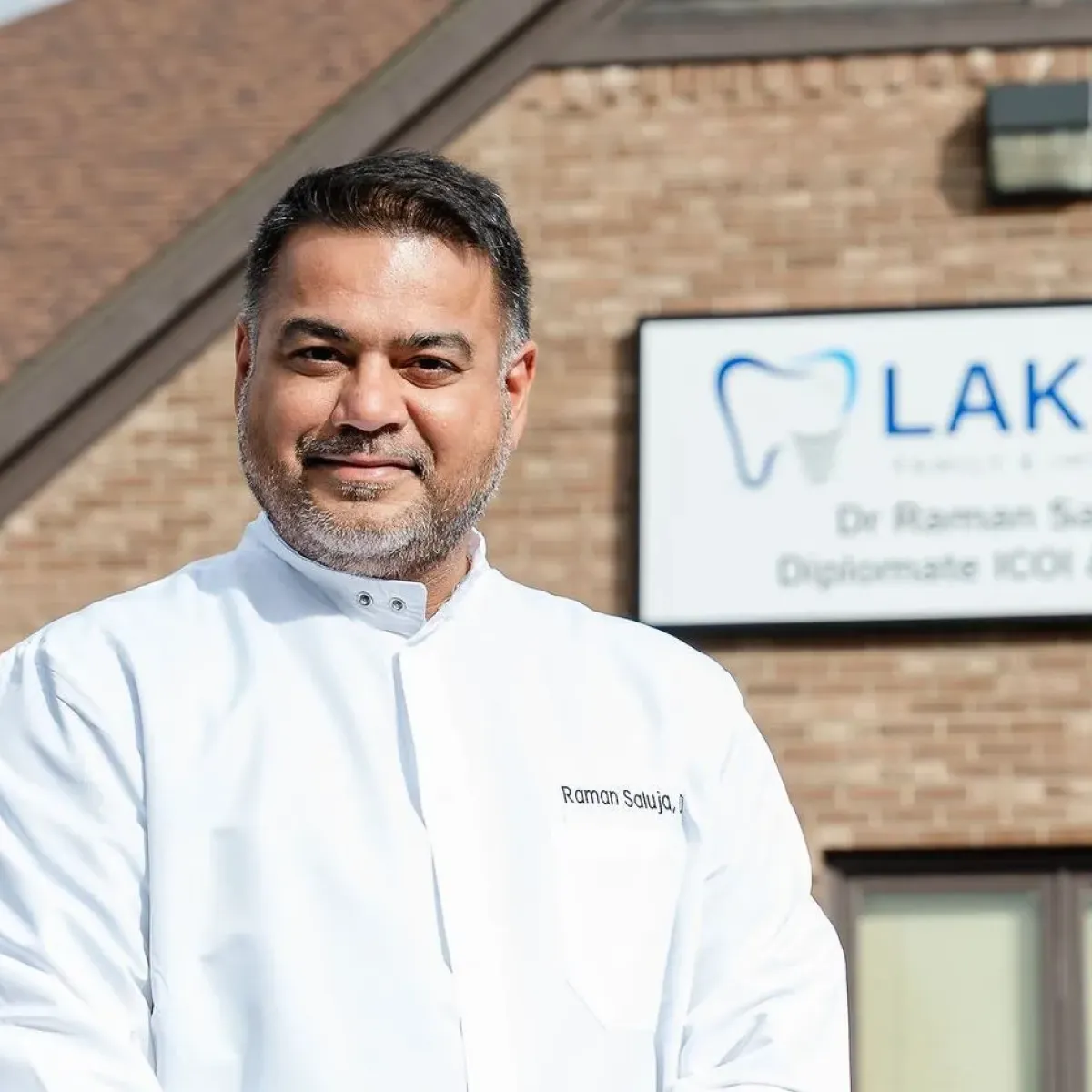
Dr. Raman Saluja is not only a seasoned implant surgeon; he’s also a Diplomate of the International Congress of Oral Implantologists, a distinction held by fewer than 1% of dentists worldwide. With advanced training and a passion for restoring smiles, Dr. Saluja has developed a tech-forward, patient-first process that prioritizes comfort, function, and long-term success.
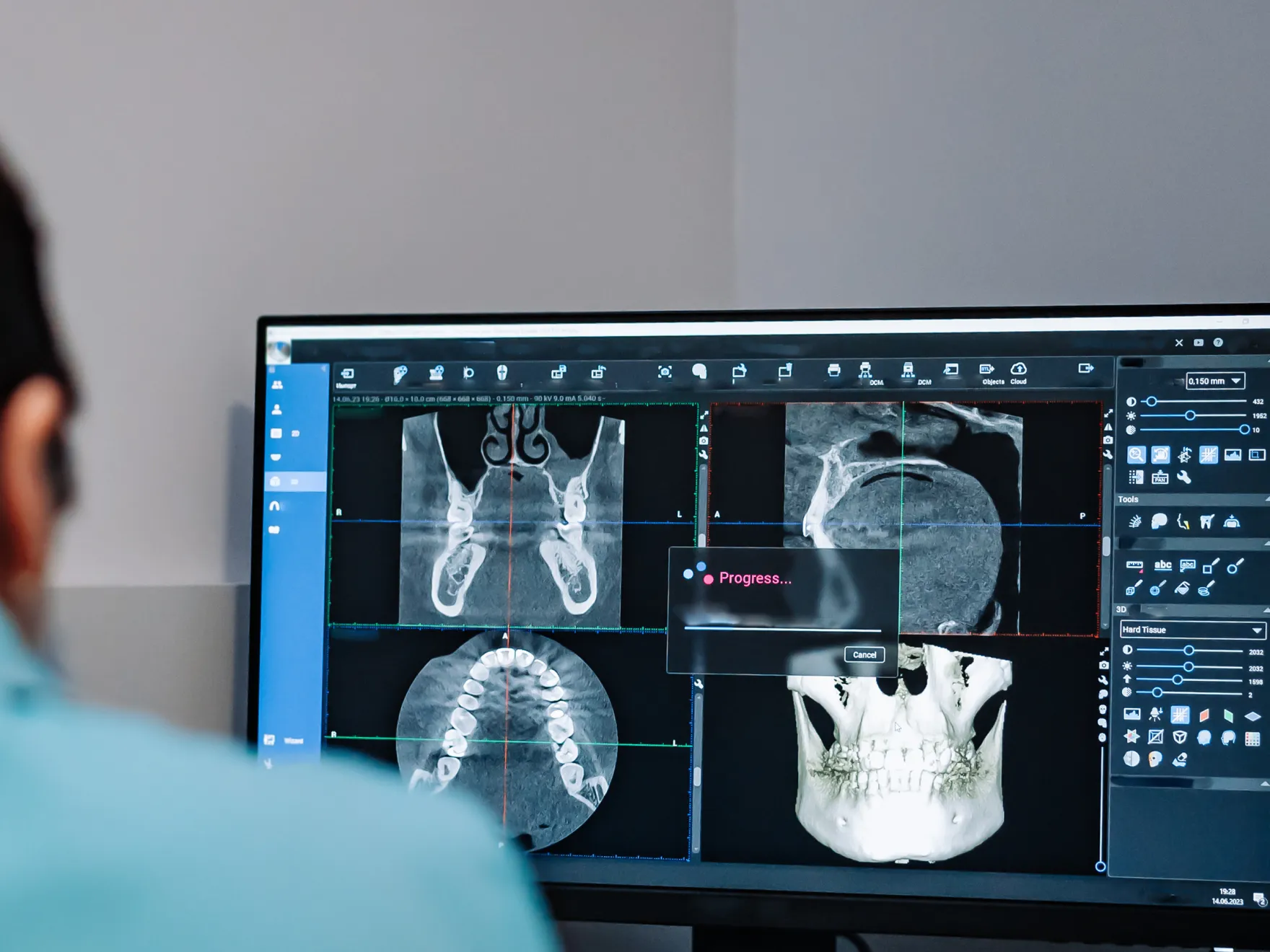
We use CBCT 3D imaging, iTero digital scans, and facially driven smile design to plan your treatment. This data-rich workflow allows Dr. Saluja to place implants with millimeter-level accuracy, minimizing complications and maximizing outcomes.

By fabricating custom surgical guides and provisional restorations on-site, we control quality and timeline without relying on outside labs. That means fewer visits and a faster path to your new smile.
We offer IV sedation for patients undergoing implant surgery. This allows you to stay relaxed and pain-free, while also giving Dr. Saluja the ability to perform more treatment in fewer visits.

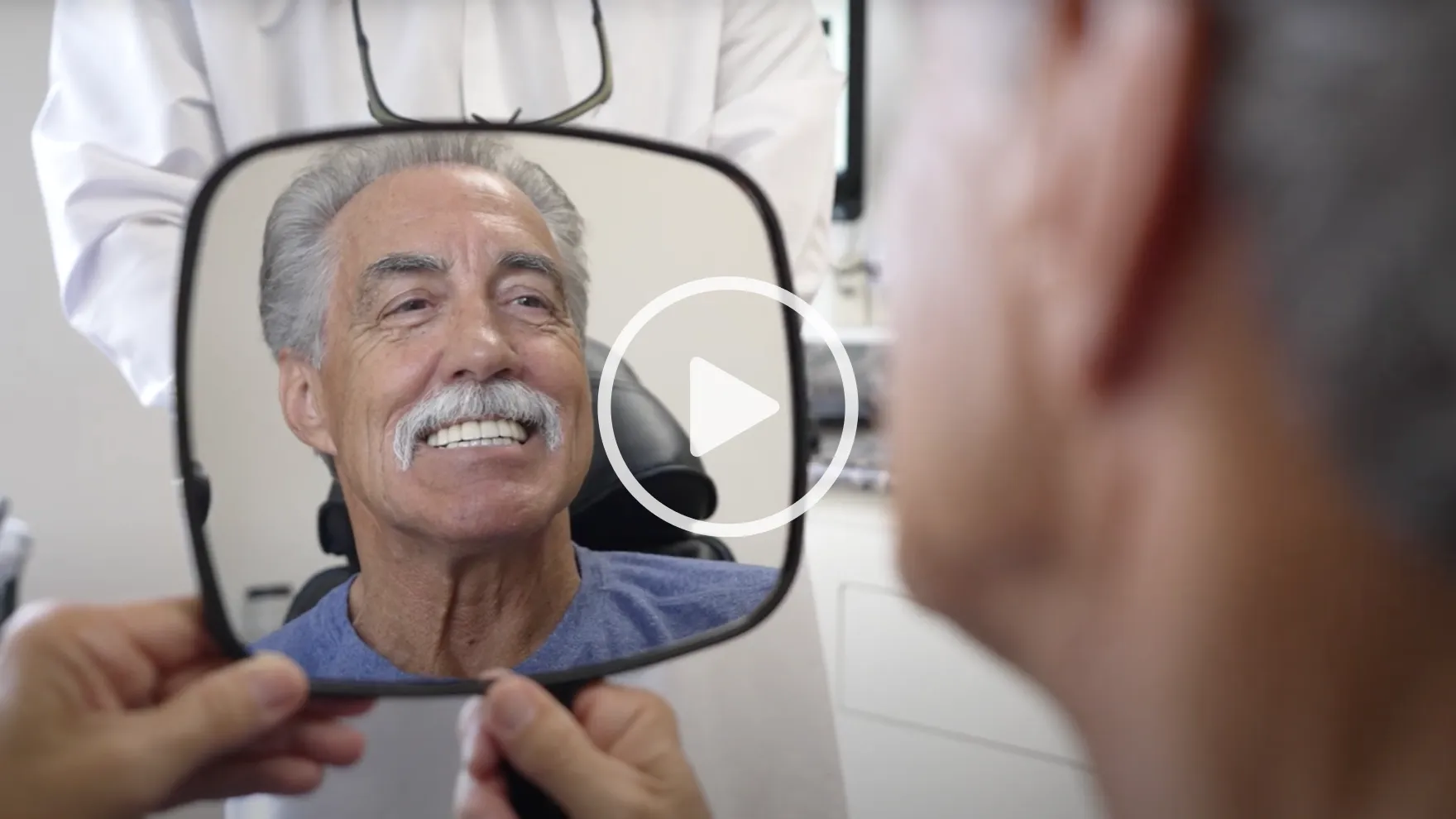
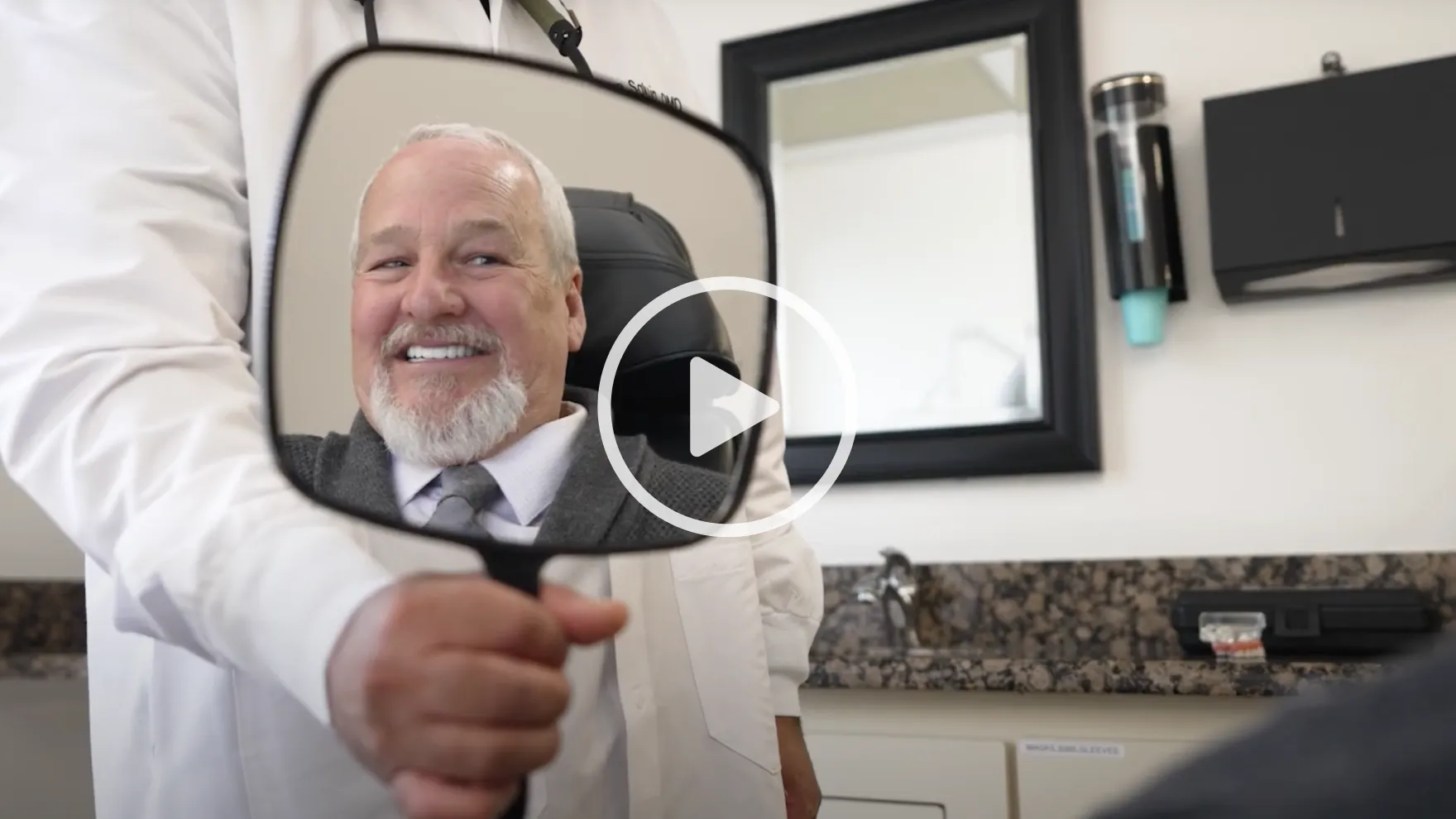
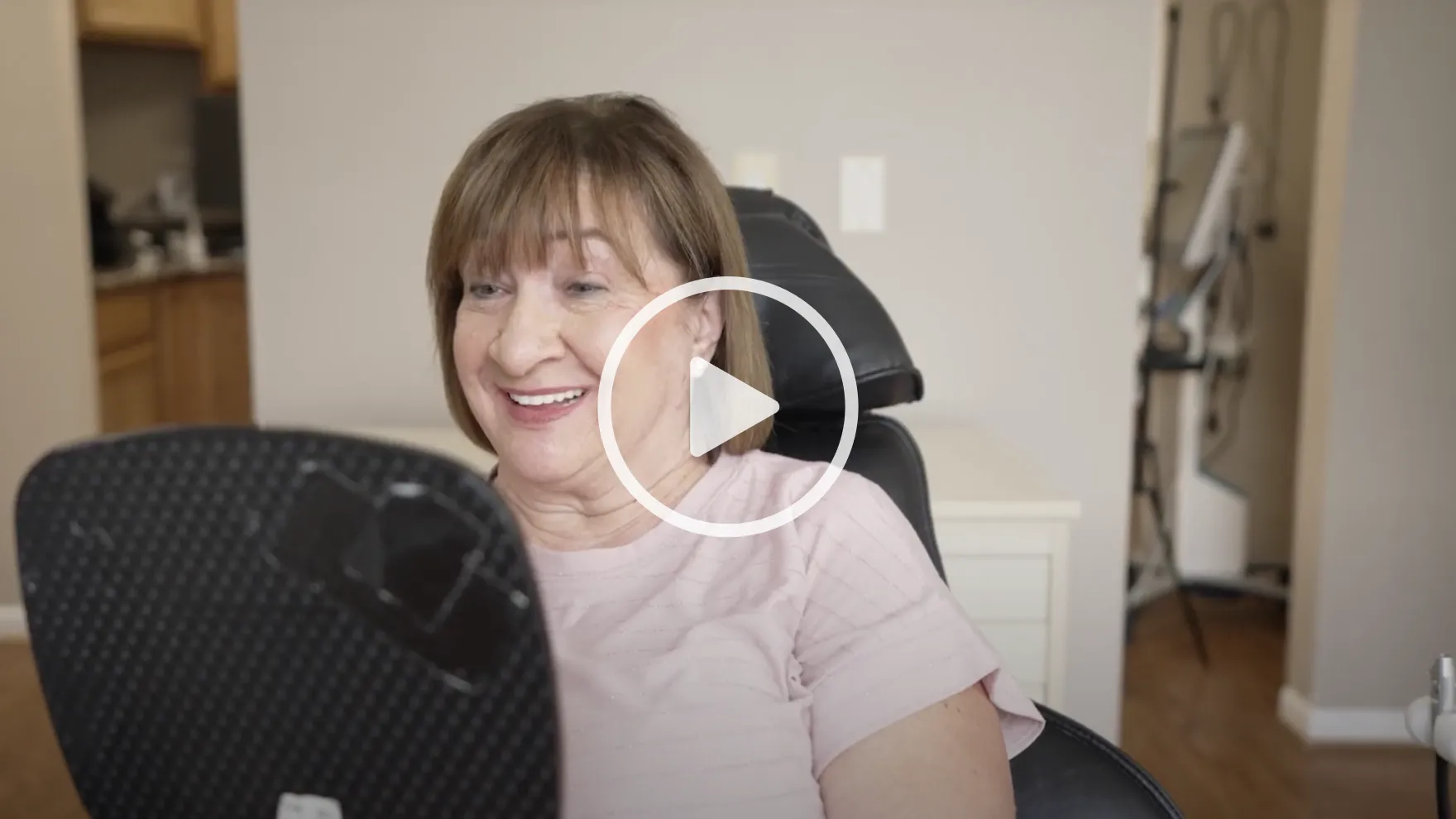
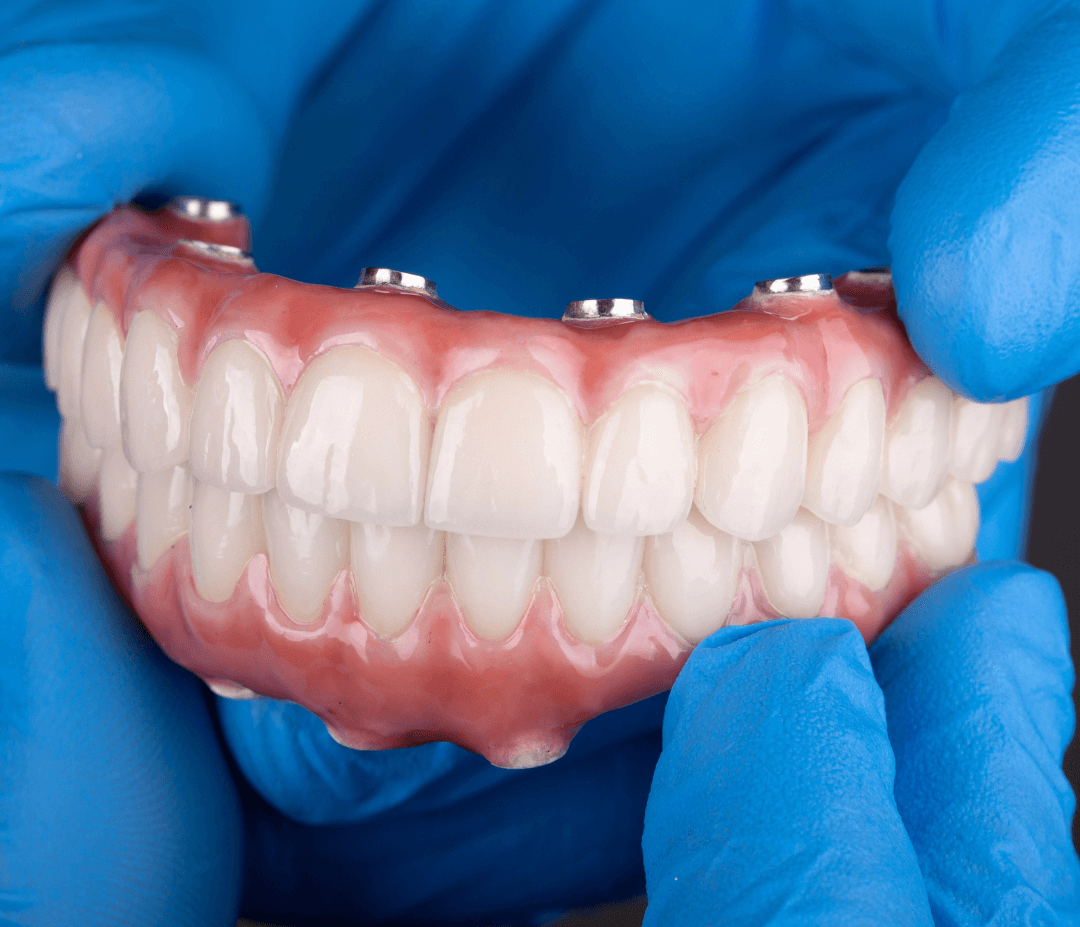
There are a variety of dental implant solutions available to cater to different dental needs, including single dental implants for individual tooth replacement, implant-supported bridges for spanning larger gaps, and All-on-4 or All-on-6 systems for full arch restoration. Additionally, we offer Zirconia dental implants for those seeking a metal-free option, and comprehensive full teeth replacement services for complete oral rehabilitation. At Lakeside Family & Implant Dentistry, we customize these options to ensure the best fit for each patient’s unique situation and preferences.


Replace a missing tooth without compromising healthy teeth nearby. A single dental implant and crown restores your smile with a stable, natural-looking result.
If you're missing several teeth in a row, an implant bridge can close the gap without the need for a traditional bridge that affects neighboring teeth. This approach offers better support and preserves more of your natural smile.
Say goodbye to loose dentures. Our full-arch solutions use 4–6 strategically placed implants to support a fixed prosthesis that stays in place. No adhesives, no slipping. Designed for longevity and comfort, this is our most transformative solution.
Looking for a removable option with better stability than traditional dentures? Snap-in overdentures connect securely to implants, giving you improved comfort, function, and peace of mind.
Dental implants are widely considered the gold standard for tooth replacement, and for good reason:
Whether you're missing one tooth or an entire arch, dental implants can dramatically improve your quality of life and oral health.

You may be a candidate if you:
Not sure if you qualify? That’s what our free consultation is for. We’ll assess your health, bone levels, and goals to create a tailored plan.

We start with a detailed exam, 3D imaging, and a conversation about your goals. You’ll leave with a personalized treatment plan and full cost breakdown. No pressure, no guesswork.
Implants are placed using 3D-printed guides for ideal positioning and minimal trauma. IV sedation is available for comfort.
The implant fuses with your jawbone in a process called osseointegration. Temporary teeth may be placed during this phase.
Once healing is complete, we attach your permanent crown, bridge, or full-arch prosthetic for a result that looks and feels natural.


Implants are fixed, permanent teeth that function like your natural ones. Unlike dentures, they don’t shift, require no adhesives, and help preserve your jawbone and facial structure.
When placed by a skilled provider like Dr. Saluja, implants have a success rate of 95–98%. We use 3D imaging and precise planning to maximize long-term results.
Yes. We offer bone grafting to rebuild your jawbone when needed. In some cases, implants can even be placed the same day as grafting, depending on your anatomy.
Age isn’t a barrier. Many of our implant patients are in their 60s, 70s, or beyond. If you’re healthy and have sufficient bone (or are open to grafting), implants can dramatically improve your quality of life.
With proper care, dental implants can last a lifetime. The crown may need replacement after 15–20 years, but the implant post itself is designed for long-term stability.
No, most patients report minimal discomfort. We use local anesthesia and offer IV sedation for a relaxed, stress-free experience. Post-op soreness is typically mild and manageable with over-the-counter pain relief.
Implant costs vary based on how many teeth you're replacing, whether bone grafting is needed, and the type of restoration. At your free consultation, we’ll provide a detailed estimate and explain your insurance and financing options.
The discomfort experienced during the placement of a bridge or an implant can vary depending on the individual's pain tolerance and the complexity of the procedure. Generally, implant surgery might involve more discomfort initially because it involves surgery to insert the implants into the jawbone. Local anesthesia and sedation options can make the process pain-free during the procedure, with post-operative discomfort typically managed with pain medication. Traditional bridges, on the other hand, tend to involve less discomfort since they usually require only the preparation of adjacent teeth, unless the bridge is implant-supported.
Both procedures, when managed with proper anesthesia and post-operative care, should not cause significant pain. The choice between an implant and a bridge should be based on a thorough evaluation of the patient's dental health, bone structure, and specific needs, guided by the expertise of their dentist.
A dentist might prefer a bridge over individual implants for several reasons:
Implant-supported bridges are designed to be a long-term solution and can last for many years with proper care. The lifespan of a bridge implant can vary based on factors such as the material used, the patient's oral hygiene, and regular dental check-ups. Typically, the implants themselves can last a lifetime, while the bridge component might need replacement due to wear after about 10 to 15 years.
Implant-supported bridges are designed to be a long-term solution and can last for many years with proper care. The lifespan of a bridge implant can vary based on factors such as the material used, the patient's oral hygiene, and regular dental check-ups. Typically, the implants themselves can last a lifetime, while the bridge component might need replacement due to wear after about 10 to 15 years.
A dental implant bridge is a type of dental restoration used to replace multiple missing teeth. Unlike traditional bridges that rely on adjacent natural teeth for support, an implant-supported bridge uses dental implants as the foundation. This method involves placing implants in the jawbone, which serve as anchors for the bridge. The bridge itself consists of a series of connected crowns that span the gap of the missing teeth, providing a functional and aesthetic replacement.

We make getting started easy with online scheduling, financing options, and a supportive, guided experience. New patients are always welcome.